The State of Multifamily: Insights from Interface Carolinas
Multifamily development remains challenging. Data recently reported by the National Multifamily Housing Council (NMHC) showed that in many markets, demand for available units faltered, vacancies rose, and rents decreased in the first quarter of the year. This data is important but does not paint a detailed picture of what is working and where the market is heading next.
Last Thursday, Kahler Slater Multifamily Design Leader, Dan Causier, AIA had the opportunity to contribute to Interface Multifamily in Charlotte, which addressed the latest data and weighed in on trends impacting development in the Carolinas and across the United States. Below, he shares his insights and a few key takeaways from the conversations that continue to resonate.
Even in a tough market, fundamentals remain strong.
Many Sunbelt cities have seen explosive growth in recent years. High demand for housing resulted in an excess of supply in 2024-25 that Q1 data suggests is still being absorbed. While we’re now seeing a slowdown in overall deliveries and new starts in 2026, analysts expect developers in elevated supply areas to struggle with meaningful renewal increases until later this year.
At Interface Carolinas last week, panelists discussing capital markets expressed that they are currently experiencing a challenging part of the cycle, citing slow rent growth predictions in the region. And with supply outpacing demand, they are seeing the return of rent concessions in the form of discounts, giveaways, and perks; a pain point for operators that is putting prospective residents in the driver’s seat.
Even so, the broader outlook remains positive. Experts point to steady in-migration to the Carolinas, about 200 people per day, and solid job growth as factors supporting long-term demand in this tax-friendly environment.
Differentiation is the key.
In a crowded market, standing out is critical. Panelists shared what’s working and what’s not:
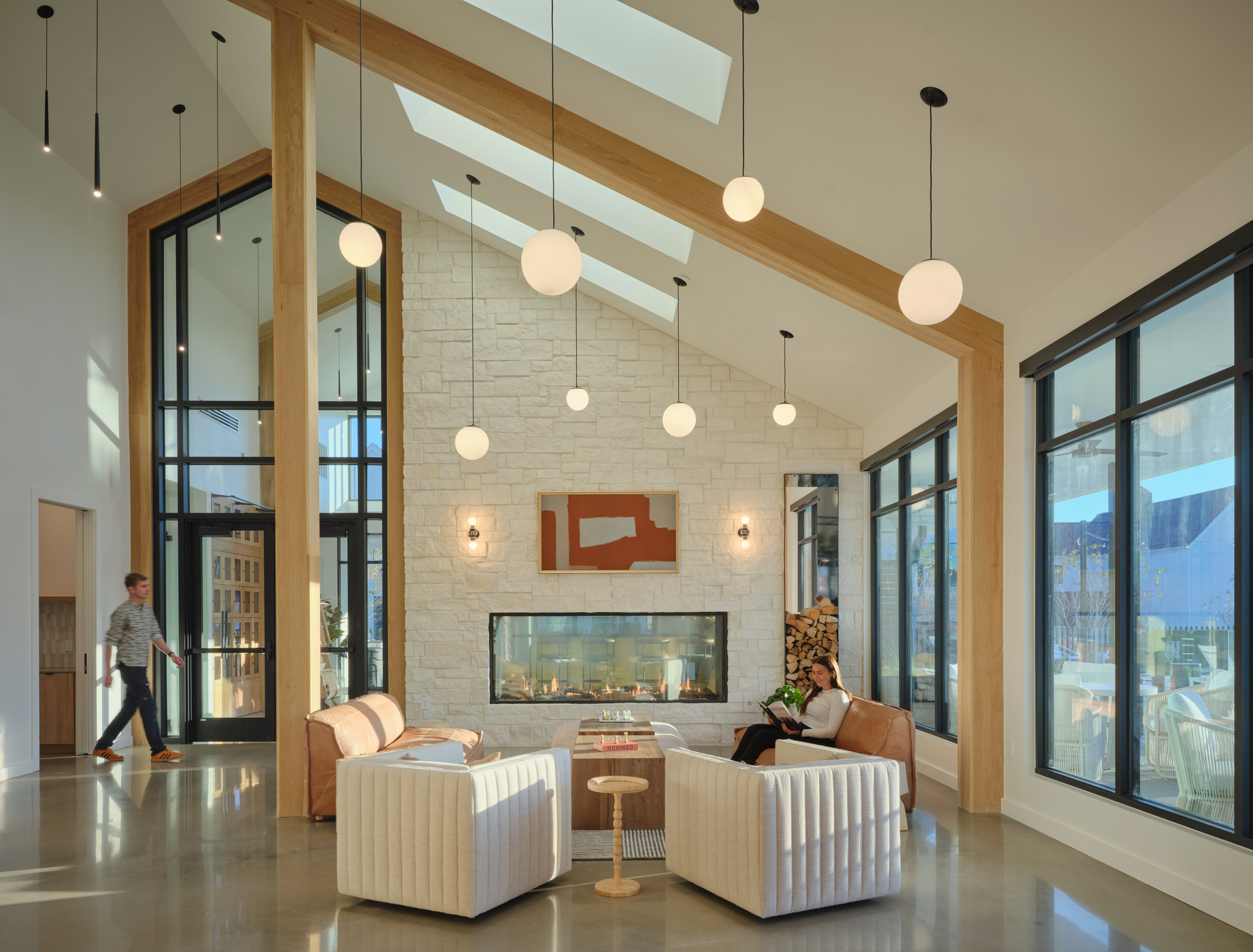
Some “wow-factor” amenity spaces (e.g. generous clubhouses) don’t appear to be carrying the same weight with potential residents, unless they generate interaction. Thoughtful design and programming must be considered; otherwise, the clubhouse is often seen as a ‘nice to have’ feature that doesn’t get a lot of use.
Operators and managers are leaning into useful features and services that improve their residents’ everyday lives, such as EV charging stations and high-quality pet amenities.
Designing resident experience extends beyond the physical. Amidst an explosion of AI-driven tenant portals, the need to consider digital experiences stood out as a common theme.
The number one difference maker? Human connection. Operators increasingly see small touches and thoughtful operations as key to residents’ renewal decisions. As Sherry Yarborough, Director of Multifamily Management at Drucker + Falk reminded us, “Kindness doesn’t cost a thing.”
The architect’s role is evolving.
On the multifamily design panel, Dan and others shared where there are opportunities for architects and designers to better serve their clients in the current environment, especially when dealing with oversupply:
Earlier collaboration is key.
When the margins for success become narrower, driving value from the early stages of a deal is crucial. Those who can navigate the speed to market constraints of the development process help secure project equity and entitlements in critical windows of opportunity.
Outsmart the VE process.
Designers benefit all parties by aligning plan configurations and material choices with financial realities from the outset. Exploring prefabrication and more industrialized construction approaches can be beneficial, particularly for larger-scale projects, but requires time for close coordination in early design phases.
Design communities, not products.
Designers who can craft unit mixes from multiple building typologies and cohesively blend designs across construction phases help achieve resilience, stronger stabilization, and longer leases, meaningfully improving a project’s financials and sense of place.
Plan for efficiency and experience.
To bring all sides of a complex project together, thoughtful planning is a must. Designers need to know how the deal pencils out, while demonstrating equal sensitivity to the small things that mean a lot to the resident. If prospective renters can sense that efficiency has overtaken experience, you have a problem.
When it comes to amenity design, get real.
Amenities are an investment that needs careful management: operators report large clubhouses sitting empty, but the project still needs to compete with comps and draw interested residents in. Architects that understand operations avoid the tendency to put amenity design on autopilot. They dig deeper and consider their programming and use, recalibrating a photogenic selling point as a real place for interaction – and a reason for renewing.
Nail the details.
In a renters’ market, residents can afford to be more discerning about their options, and small misses carry outsized weight. Appropriately durable finish choices, smart detailing, and thoughtful design of mechanical systems, lighting, and acoustics are non-negotiable markers of quality.
The conversations at Interface Carolinas made one thing clear: while the market is facing headwinds, the opportunities ahead belong to teams that thoughtfully combine operational optimization with a strong understanding of resident experience. As supply levels normalize and competition remain high, success will depend on creating communities that are not only financially resilient, but also meaningful places to live. In many ways, the future of multifamily is less about adding fluff and more about delivering the right experiences, in the right places, with long-term value in mind.
If you are contemplating your next development, reach out! We can help.